A libretto is the written text of a musical: the dialogue, song lyrics and stage directions that carry the story. It lets you follow the whole show on the page, including the moments between the songs that you will never hear on a cast recording. A vocal score is something different. It puts the music on the page for singers and pianists.
That is the practical answer. The more interesting one is that reading a libretto can change the way you hear a musical you thought you knew. A familiar song arrives after a conversation. A line that sounded certain on an album turns out to be a character trying very hard to convince themselves. The song has not changed, but the story around it has.
What does a libretto include?
In musical theatre, the word usually means the book and lyrics: spoken scenes, sung words and the directions that tell you who is there and what happens. The Library of Congress describes a musical libretto as the script and song lyrics for a show. You might also see an edition labelled complete book and lyrics, which is often the clearest description of what you are buying.
The term can be used somewhat differently in opera, and published editions vary. Some have photographs, introductions or notes alongside the text. Those additions can be lovely, but they are not what makes a book a libretto. What matters is whether you can read the show itself rather than just read about it.
The “book” of a musical is its dramatic writing: the characters, scenes and spoken dialogue. The lyrics are the words sung to the music. In a published musical theatre libretto, you can see how the two meet. A character says something they cannot quite finish saying, and then a song takes over. Or a song ends, and one ordinary sentence changes what it meant.
Is a libretto the same as a vocal score?
No. If you want to read the story, look for a libretto or an edition described as the complete book and lyrics. If you want to sing or play the music, look for a vocal score. A vocal score generally contains musical notation for the vocal parts and a piano reduction of the accompaniment. Some rehearsal editions combine text and music, so it is worth checking the description of the particular book.
| Read the musical from beginning to end |
Libretto / complete book and lyrics |
Dialogue, lyrics and stage directions |
| Learn or accompany the songs |
Vocal or piano-vocal score |
Vocal lines and piano music, often with lyrics |
| Hear a particular production's performances |
Cast recording |
Recorded songs, usually without every spoken scene |
A cast recording is a wonderful way into a show. It also has its own limits. You may know every note of a song and still have only a partial sense of why that character sings it at that point. The libretto restores the conversations, interruptions and decisions around the music. Concord Theatricals, for example, distinguishes its script perusals from piano-vocal scores.
Why read a musical when you can listen to it?
Because listening and reading give you different parts of the pleasure. On the recording, a singer makes thousands of decisions for you, often brilliantly. On the page, you can stop after a line, go back to a scene, or notice a word that passed you by at full speed. You have more room to wonder what the character knows, what they are hiding, and why this moment needed a song at all.
You also get to imagine the production. A stage direction may tell you that someone leaves, but it does not settle how slowly they go, whether they look back, or what the silence feels like after them. That space belongs to the reader for a moment.
It is especially rewarding with a show you already love. Knowing the music does not spoil the reading. It gives you an inner soundtrack, while the dialogue reveals all the small turns that brought you to each song. And if you have never seen the show, a libretto can be a way to meet it without someone else's staging becoming your first and only version.
Which libretto should you start with?
Start with a musical whose songs have stayed with you, then choose an edition that contains the complete book and lyrics. Here are three quite different ways into the form.
Company: when a song changes what a scene means
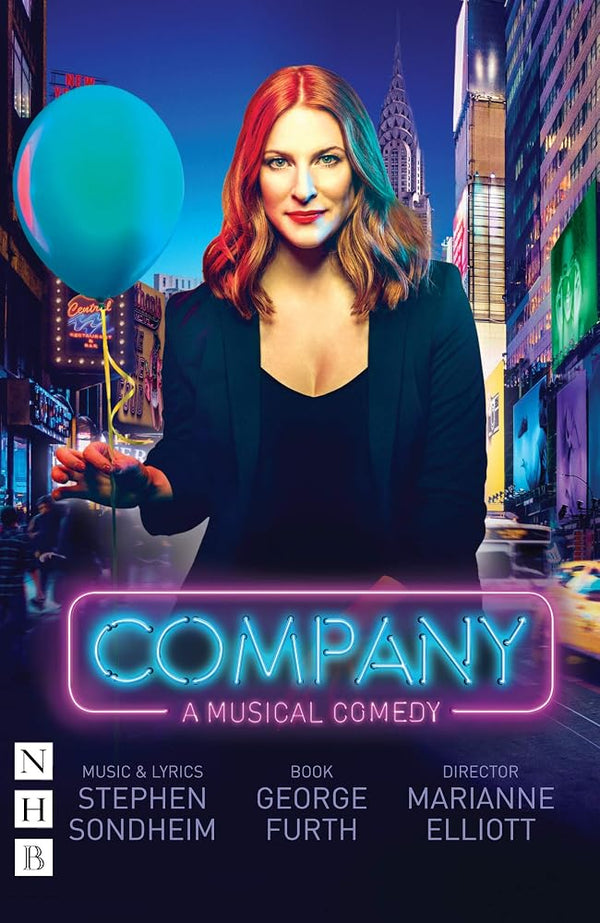
The revised book and lyrics from Marianne Elliott's 2018 production.
Company: The Complete Revised Book and Lyrics is the text of Marianne Elliott's 2018 revival, with Bobbie at the centre. It is a particularly good choice if you are curious about the relationship between a production and the words it performs. Reading the scenes gives the songs their social setting: the friends who keep asking questions, the jokes that do not quite cover the discomfort, and the pressure gathering beneath a birthday party. This is the revised version, so check that it is the edition you want if you know another production well.
The Last Five Years: two people, two directions
The complete book and lyrics of Jason Robert Brown's musical.
In The Last Five Years: The Complete Book and Lyrics, Cathy tells the story of a relationship backwards while Jamie moves forwards. The structure is easy to explain and far more affecting to experience. On the page, you can turn back and notice how differently the same stretch of time looks to each of them. It is a compact, intimate place to begin if you want to see how the order of a story can shape your sympathy.
The Sound of Music: meet the stage show on its own terms
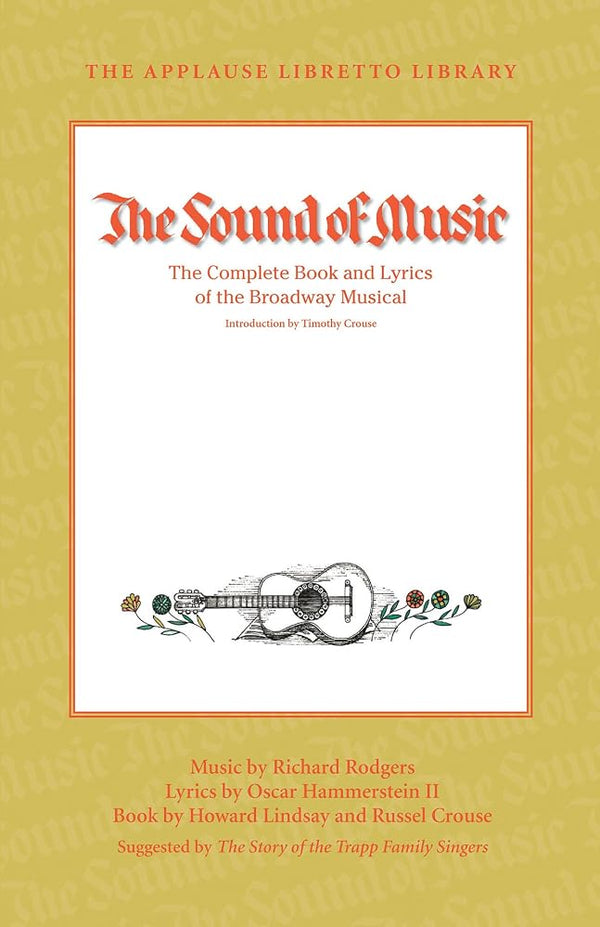
The published book and lyrics of the Broadway musical.
The Sound of Music: The Complete Book and Lyrics of the Broadway Musical is a chance to read the stage musical rather than rely on your memory of the film. If the songs feel as though they have always existed in one familiar order and setting, reading the Broadway book asks you to pay attention to the scenes that hold them together. It is an inviting first libretto for anyone who knows the story but has never read a musical.
How do you read a libretto?
There is no special technique. Read it as you would a play, and let the songs be part of the action rather than treating them as breaks from it. You do not need to perform every line in your head. The words will still tell you plenty.
If you know the cast recording, try reading one scene before playing the song that follows it. Then return to the page. What changed when you heard a voice, an arrangement and a tempo? If you do not know the music, read a little first and let your own version of the scene form before you listen. Neither order is the correct one. Each lets you discover something the other can hide.
Pay attention to the quiet moments, too. Often the line you remember is the lyric, while the line that made it necessary was spoken just beforehand.
Frequently asked questions
Does a libretto contain sheet music?
Usually, no. A published libretto focuses on the words and dramatic text. For musical notation, check for a vocal score or piano-vocal score. Some combined rehearsal editions exist, so always check the listing for the specific edition.
Is the libretto just the song lyrics?
For a musical, it usually includes the spoken scenes as well as the lyrics. A lyrics-only collection is a different sort of book. The dialogue matters because it shows what happens between songs and why the songs arrive when they do.
Is the “book” of a musical a physical book?
The word book also names the musical's dramatic writing, including its story and dialogue. A published libretto is, of course, a physical book too, which is where the terminology gets a little confusing.
Can I enjoy a libretto if I have not seen the show?
Yes. You can follow the characters and imagine the staging for yourself. If the music is unfamiliar, a cast recording can make an excellent companion, either before or after you read.
Are all published librettos the same as the current stage production?
No. Musicals are revised, and published editions may document a particular Broadway, West End or revival version. Check the edition details if you want to read the text of a production you have seen.
A libretto lets you spend time with the part of a musical that can disappear fastest in performance: the thought behind a line, the pause before an answer, the point where speech gives way to song. If you are curious, browse Fourth Wall's librettos and start with a show you would happily meet again. For more on reading a musical closely, you might also enjoy our guide to where to begin with Stephen Sondheim.

